
Plain words on every screen
No tricky words. No long sentences. The sign-up form, the chat box, and the safety tips all use plain English at a clear reading level. If a word might be confusing, we explain it right there on the page.
A dating site for adults with Down syndrome who want real relationships - friendship, dating, partnership, marriage. Big buttons. Plain words. Hand-checked profiles. No baby talk, no “inspiring” framing - just grown-ups meeting grown-ups.
Free to join · No credit card · Hand-checked profiles · Supported-decisions friendly
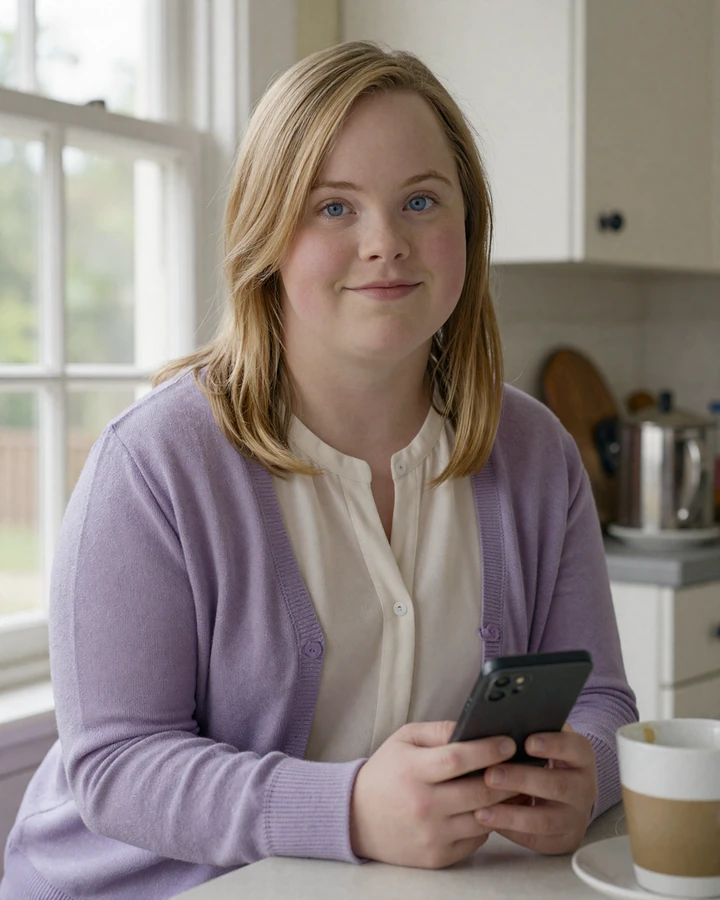
This is a dating site for grown-ups. Members are 18 and older. People with Down syndrome have always dated, loved, and married - the National Down Syndrome Society confirms that adults with Down syndrome form long-term partnerships, live with their partners, and get married, just like other adults. What has been missing is a safe online place to meet people, built with the community in mind.
We use person-first language across the site - “people with Down syndrome,” not labels that reduce a whole person to a diagnosis. We use clear, plain words. We do not call adult members “sweet little angels.” We do not call dating “adorable.” We treat every member like the grown-up they are.
Many of our members work - in offices, in cafés, in retail, in art studios, on farms. Some are in supported employment. According to research by Lindstrom and colleagues, about 26% of adults with an intellectual disability hold full-time jobs, and many more work part-time or in flexible roles. Income, work, and independence look different for each person, and a real dating site has to make room for that.
“Adults with Down syndrome have romantic relationships and get married. They deserve dating tools built for adults - not for children.” - National Down Syndrome Society, position on adult relationships
Most dating apps are built for fast scrolling and tiny text. Our Down syndrome dating app is built the other way. Bigger words, fewer steps, more pictures. Every screen has been tested with adult members who have intellectual disabilities, and changed when something was confusing.
No tricky words. No long sentences. The sign-up form, the chat box, and the safety tips all use plain English at a clear reading level. If a word might be confusing, we explain it right there on the page.
All buttons are at least 56 pixels tall. The main text is large and easy to read. Colors have strong contrast so the screen is easy on the eyes. You can also turn on extra-large text mode in your settings.
Your profile starts with photos, not paragraphs. You can write a short bio - three or four sentences is enough. You can also record a short video saying hello. Photos and video tell people who you are without a lot of typing.
Sign-up is one screen, one question. You can stop and come back any time. Your progress is saved. No long forms. No surprise pop-ups.
Some members find typing slow or tiring. You can send voice messages instead. You can also send short video clips. Members choose how they want to talk - by text, voice, or video.
A green “Help” button is on every page. One tap opens our safety center with simple steps: how to block someone, how to report a profile, and how to reach a real person on our team.
Before we launch a new feature, we test it with a panel of paid adult co-designers who have Down syndrome. If a button is confusing, we change the button. If a screen has too many words, we shorten it. The community owns the design choices, not just the feedback form.
Safety matters even more on a Down syndrome dating app. Adults with intellectual disabilities are targeted more often by online scams and bad actors. The National Council on Disability has reported that people with intellectual and developmental disabilities experience abuse at rates up to seven times higher than the general population. We take that seriously.
Every new profile is checked by a real person before it goes live. Our moderation team looks at the photos, the bio, and the verification video. If something looks fake, the account does not get approved. This is the same kind of hand-checking used by trusted platforms in the disability dating space, and it is one of the main reasons members trust us with Down syndrome marriage-minded matches.
Our team is also trained to spot the warning signs that matter most for this community - profiles that ask for money quickly, profiles that target adults who live with family, and profiles that try to move the conversation off the platform too soon. When we see those patterns, the account is removed and the device is blocked.
Read more in our safety tips and the full dating app safety guide.
Many adults with Down syndrome make their own choices with a little help - from a parent, a sibling, a job coach, or a friend. This is called supported decision-making. It is the law in many US states, and it is the model we build around. You are the one dating. A trusted support person can help with the parts that are harder.
In your profile settings, you can mark that you have a support person and what they help with. Matches see a small note: “This member uses a support person for messages.” Most members say this note builds trust - it tells the other person you are honest, and it sets clear expectations from day one.
If you support an adult child or sibling on this site, thank you. Your role is to help - not to choose. Adults with Down syndrome have the same right to romance, intimacy, and marriage as anyone else, and that right is protected under the Americans with Disabilities Act. A 2023 University of South Florida study on intellectual disability and relationships found that adults with strong family support combined with personal autonomy reported the highest relationship satisfaction. Both parts matter.
Mainstream apps were not built for this community. A dedicated site changes who you meet, who reviews the profiles, and how safe the conversations feel.
Real adults. Real relationships. Shared with permission, in the words our members chose for themselves.
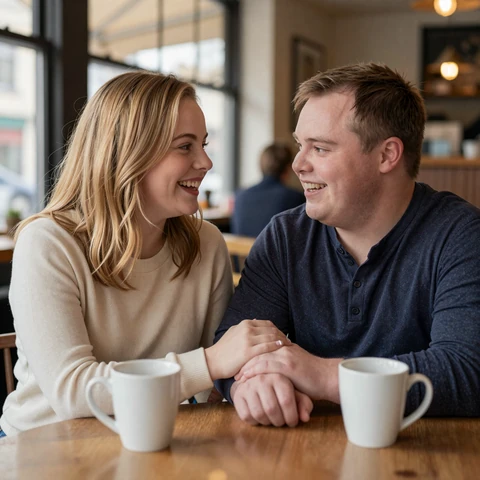
We met at a coffee shop for our first date. We talked for two hours. Mark made me laugh. I knew on the third date I wanted to marry him. He proposed at the same coffee shop one year later.
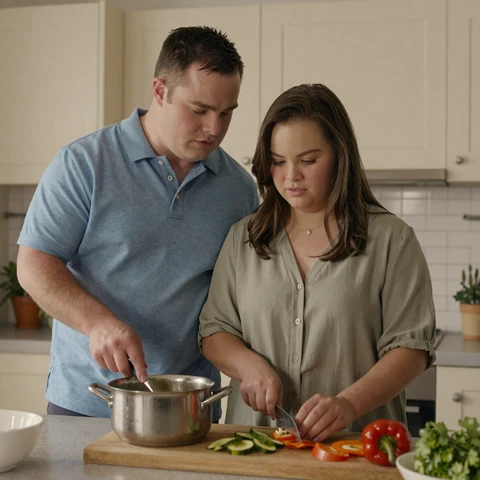
I work at the grocery store. Rosa works at the library. We saved up and got our own apartment together last spring. We cook dinner. We watch movies. It is a normal married life. That is all we ever wanted.
Many members find their best matches across a few related communities. Each one keeps the same safety rules and the same person-first respect.
A respectful community for adults of short stature - height as a preference, not a problem. Hand-checked profiles, the same big-button design.
Visit dwarf datingIdentity-first community for Autistic adults. Plain-language profiles, sensory filters, low-pressure messaging - much of which our Down syndrome members also enjoy.
Visit autism datingA plain-language guide for adults coming back to dating - written for first-timers, late starters, and anyone who has felt left out by mainstream apps.
Read the guideDisabledDating is one of the leading dating apps built for adults with disabilities, including a dedicated Down syndrome dating site. The platform uses plain language, large buttons, photo-first profiles, hand-checked accounts, and a safety team trained on the specific scams that target adults with intellectual disabilities. The basic tier is free, and every profile is reviewed by a real person before it goes live.
Yes. The basic tier of our Down syndrome dating app is free and does not ask for a credit card at sign-up. Free members can build a profile, browse other adult members, send and receive messages, use selfie-video verification, and turn on extra-large text mode. A small premium tier adds optional features like advanced filters, but the core dating experience stays free for everyone.
Yes. Adults with Down syndrome date, live with partners, and get married - this is documented by the National Down Syndrome Society and supported by every major US disability rights organization. Marriage between adults with Down syndrome is legal in every US state. Some couples choose to keep certain benefits like SSI by partnering without legal marriage; others marry formally. Both paths are valid, and a good dating site supports both.
Every new profile is hand-checked by a real moderator before it goes live, which removes most fake and recycled accounts. Members verify with a short selfie video. Our team is specifically trained to spot patterns that target adults with intellectual disabilities - early money requests, romance-scam scripts, and pressure to move off the platform. Confirmed bad actors are removed and their devices are blocked. The Help button is on every screen.
Yes, and many members do. Supported decision-making is a recognized legal model in most US states. A trusted support person can help you pick photos, read messages out loud, plan a safe first meet-up, and join the start of a video call to say hi. Your profile can include a small note that you use a support person - most matches say this builds trust. The decisions about who you date and what you say still belong to you.
Members are 18 or older. We verify date of birth at sign-up and again during photo verification. This is an adult dating community for adult relationships - friendship, partnership, marriage. The site uses adult tone and adult vocabulary throughout. Teen accounts are removed.
Yes. Adults with Down syndrome work in many settings - supported employment, day programs, part-time jobs, full-time jobs, and self-employment. Adults live with parents, with roommates, with partners, and on their own. None of these affect whether you can date. Your profile lets you describe your real life in your own words.
Every profile carries a green verification badge after the member completes a short selfie-video that matches their photos. Members can filter their inbox so only verified profiles can message them. If a profile asks for money, asks for personal information like a Social Security number, or pressures you to meet alone in a private place, tap Help and report - our team responds within four hours on average.