
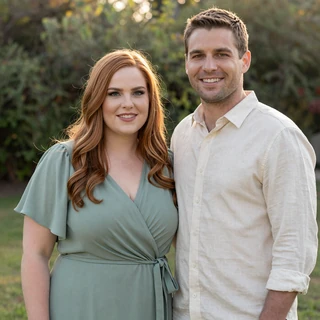
Kaci & Collin
Met in 3 daysThree days. That is how long it took to match. Our February wedding was also a celebration of Collin coming through surgery - every guest knew the weight of that day.
One partner is disabled, the other isn't - and the relationship works because of equality, not despite difference. A grounded look at interabled couples, the caregiver trap, and the language partners actually choose.
By Maya Okonkwo, Editor · Reviewed by community readers · Updated May 2026
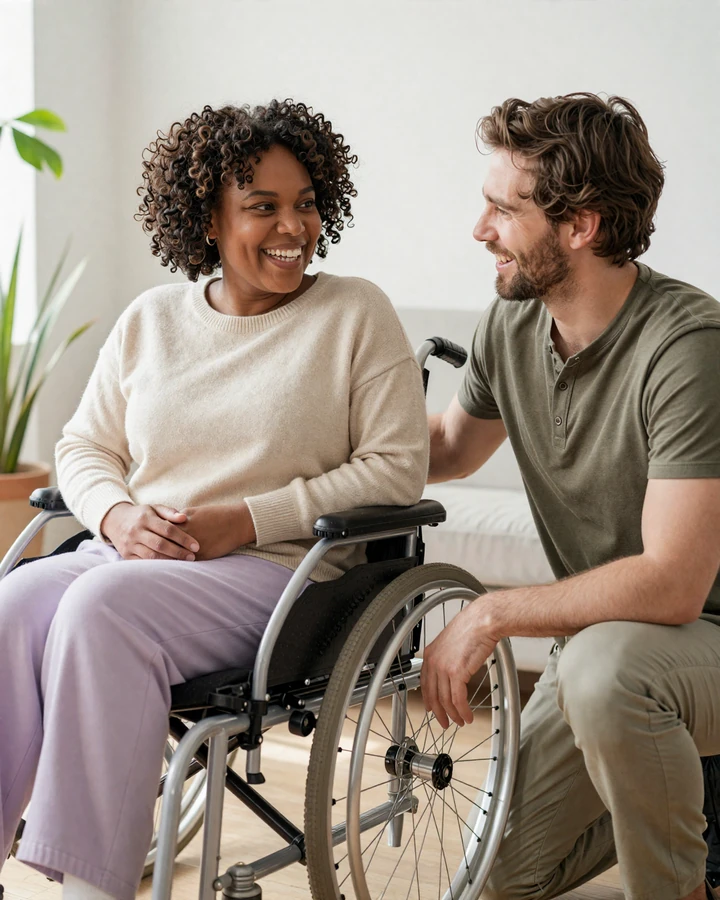
An interabled relationship is one in which the partners have different disability statuses - typically one disabled partner and one non-disabled partner. The word is descriptive, not prescriptive: it names the demographic without ranking the partners.
The term grew out of disability-led media in the late 2010s, partly in response to mainstream tropes that framed these relationships as either tragedy or inspiration. Neither framing is accurate. Interabled couples date for the same reasons every couple does - shared sense of humour, values, plans, the way someone laughs at their own jokes.
The disability is part of the relationship the same way any partner's body, history, or schedule is part of a relationship. It changes logistics. It rarely changes the reasons two people stayed.
The most common failure mode in interabled couples is one researchers have studied directly. Dr. Sarah Hunt's work in the United Kingdom describes how even well-intentioned non-disabled partners can quietly slide into a caregiver frame instead of an equal-partner frame - and how that drift, left unchecked, erodes the relationship over time.
"Even well-intentioned non-disabled partners can unconsciously adopt a caregiver framing rather than an equal-partner one. Successful couples actively push back against that drift - they name it when it shows up and choose differently." - paraphrased from research by Dr. Sarah Hunt
Couples that hold the line on equality tend to do the same handful of things. They outsource heavy care tasks to paid attendants or family when possible, freeing the relationship to be a relationship. They check in monthly about roles. They keep date nights non-negotiable - not "when energy allows." And they let the disabled partner take care of the non-disabled partner too, often and visibly, because care running both ways is what makes it partnership instead of service.
Two interabled couples whose stories ran in PEOPLE Magazine and have become reference points for our community.
Three days. That is how long it took to match. Our February wedding was also a celebration of Collin coming through surgery - every guest knew the weight of that day.

I have a sitting disability - driving hurts. Howard has Parkinsons - his hands shake. He drives us. My steady hand helps us eat. Eight years after the bike accident that changed my life, we fit.
Read more interabled and same-ability success stories from the DisabledDating community.
Three habits that interabled couples we interviewed mention again and again.
"I need a quiet table" lands differently than "I cannot handle this place." The first is a logistics request. The second sounds like apology. Lead with the logistics - feelings can follow.
Once a month, twenty minutes: what is working, what is sliding into caregiver mode, what we want to change. Calendar it. Couples that wait for problems to surface organically find them at the worst moment.
The disabled partner takes care of the non-disabled partner too - emotionally, practically, in bed. If care only goes one direction, the relationship is already drifting. Reciprocity is the marker of partnership.
There isn't one correct answer. There is your partner's preference, which you ask about and use.
Person-first language ("a person with epilepsy") puts the person before the diagnosis. Identity-first language ("an autistic adult," "a Deaf woman") treats disability as inseparable from identity. In 2021 the Association on Higher Education and Disability (AHEAD) adopted identity-first language in its materials, noting that it "challenges negative connotations by claiming disability directly" and reflects the diversity of human bodies and minds.
Different communities lean different ways. The Autistic and Deaf communities largely prefer identity-first. People with epilepsy, cerebral palsy, or bipolar disorder largely prefer person-first. Inside an interabled relationship, what matters is not which side wins - it is whether the non-disabled partner asked and remembers the answer.
| Approach | Example phrasing | Communities that often prefer it | When it fits |
|---|---|---|---|
| Identity-first | "Autistic adult," "Deaf woman," "disabled writer" | Autistic, Deaf, much of the broader disability rights movement | When disability is a claimed identity and source of culture or pride |
| Person-first | "Person with epilepsy," "people with cerebral palsy" | Epilepsy, cerebral palsy, Down syndrome, bipolar disorder communities | When the partner separates medical condition from self-concept |
| Mix and match | Identity-first in some contexts, person-first in others | Many individuals across all groups | When the partner uses different language by audience or mood - follow their lead |
On DisabledDating, every profile carries an identity-first or person-first preference toggle, so matches see your chosen language before the first message. Small thing - large signal.
An interabled relationship is a romantic partnership in which one partner is disabled and the other is non-disabled. The term names a demographic without ranking the partners - equality of voice and decision-making is what defines a healthy interabled couple, not the disability status itself.
Yes. PEOPLE Magazine has profiled multiple interabled marriages, including Kaci and Collin, and Leslie and Howard, who met later in life. Long-term success correlates strongly with avoiding the caregiver dynamic, scheduling regular check-ins, and outsourcing heavy care tasks where possible so the relationship stays romantic rather than transactional.
Researcher Dr. Sarah Hunt identifies the caregiver drift as the leading failure mode for interabled couples. Counter it by outsourcing care tasks to paid attendants when possible, letting the disabled partner take care of the non-disabled partner too, scheduling monthly relationship check-ins, and naming the dynamic out loud when it starts showing up.
Ask, then use what they prefer. Autistic and Deaf communities largely prefer identity-first language. People with epilepsy, cerebral palsy, or bipolar disorder largely prefer person-first. AHEAD adopted identity-first language across its materials in 2021, but individual preferences vary - the rule is to ask once and remember.
It is different in logistics, not harder in love. Interabled couples plan venues with accessibility in mind, communicate needs explicitly, and often handle paperwork (insurance, transport, attendant care) together. None of that is harder than any couple managing kids, careers, or in-laws - it is just different terrain that the partnership learns together.
Stories, categories, and guides that pair well with this article.
More interabled and same-ability couples who met on DisabledDating - names, photos, and the messages that started it all.
Read the storiesBuilt for ambulatory and non-ambulatory members alike - accessibility filters, venue ideas, and a community that gets it.
Open the categoryWhere Leslie & Howard-style stories of complementary partnership often begin. Profile prompts that go past assumption.
Open the category