
Autistic adults · No-mask dating

Autism Dating Site

Autism Dating App for Autistic Adults Who Want to Stop Masking

Meet Autistic adults - diagnosed late, diagnosed early, self-identified, AuDHD, formerly labelled with Asperger's - who already understand info-dumping, parallel play, low-cap sensory days, and why "let's just see where the night takes us" is not a plan. Detailed profiles. No expiring matches. No flashing animations.

See How It Works

Free to browse · No credit card · Identity-first by default · Sensory-friendly UI

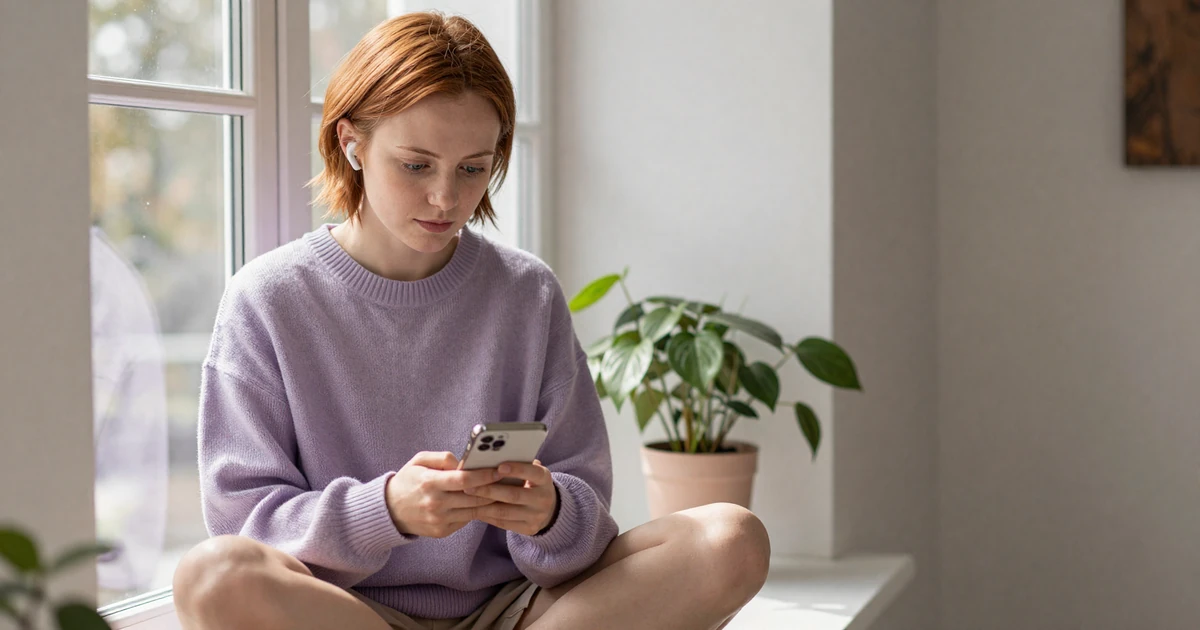
Iris, an Autistic woman wearing noise-reducing earbuds, reading a calm message on an autism dating app from her window bench
An Autistic-led community

A Dating Site Built By and For Autistic Adults

An autism dating site should be the one place online where you don't have to pre-translate yourself. For most apps it's the opposite. Tinder rewards a quick, ambiguous quip. Hinge prompts assume neurotypical small talk. Bumble's 24-hour timer punishes the slow, careful drafter. The whole architecture asks you to mask - and then asks why your match rate is flat.

We use identity-first language by default - "Autistic adults," "Autistic woman," "Autistic engineer" - because the Autistic self-advocacy community consistently asks for it. Autism isn't a coat you take off; it's the wiring. Roughly 2.2% of US adults are Autistic (CDC, 2024) and adult diagnosis rates among women and nonbinary people have risen 315% since 2011 (Truven Health Analytics). The community is here, online, and underserved by mainstream dating.

Our autistic dating site community skews 25-48, spans early- and late-diagnosed adults, includes AuDHD members (autism plus ADHD) and people who still use the older Asperger's label for themselves. About 38% of profiles list a special interest in the opening prompt. About 61% prefer text-first or voice-note communication for the first two weeks. About 84% want a detailed profile over a sparse one.

None of that is small talk. It's data we surface so you can find people whose dating rhythm matches yours - without performing extroversion to get there.

You can switch to person-first language ("adult with autism") in your profile preferences at any time. We honor both, and the platform never overrides your choice.

Why Dating With Autism on Mainstream Apps Hurts

Dating with autism on Tinder, Bumble, or Hinge isn't hard because Autistic adults can't date. It's hard because those apps are designed around three patterns that punish Autistic communication. Recognize the pattern and the burnout makes sense.

Masking

The exhausting performance of "chill"

Mainstream apps reward fast, low-information replies and ambiguous flirting. To compete, Autistic users mask - suppressing stims, faking small talk, mirroring tone they don't feel. A 2023 University of Portsmouth study linked sustained romantic masking to a 2.4× higher rate of burnout and depressive episodes. Here's the thing: the mask works until the first in-person date. Then it breaks, and the relationship breaks with it.

Unwritten scripts

"You should have known" without being told

Mainstream dating runs on unspoken rules: how long to wait before replying, when a "we should hang out" is real, when "good night" means goodnight versus goodbye. Autistic adults often process language literally and prefer explicit communication. Punishing literal readers is not a feature - it's a design failure. Our prompts ask directly: "What's the right reply window for you?"

Sensory overload

Bright colors, push pings, expiring chats

Saturated red gradients, autoplaying videos, swipe streak counters, and "your match expires in 18:42" timers are stimulant design. For sensory-sensitive Autistic users they trigger shutdowns and avoidance. Our interface uses muted lavender and cream, no autoplay, no countdown timers, no streak guilt. You open the app, you close the app - at your pace.

Features Designed Around How Autistic Adults Actually Date

Most autism dating apps copy the mainstream playbook and slap a "neurodivergent friendly" badge on it. We started from the opposite direction - what would dating look like if it were designed by and tested with Autistic adults first? Three feature sets that came out of that work.

Detailed profiles, no word limit

Up to twelve long-form prompts plus eight structured fields: communication style, sensory tolerance, energy budget, special interests, social battery, conversation pace, repair preferences, and disclosure pace. Write a 600-word answer if that's how you actually think. Match quality jumps when both people know the shape of the other person before message one.

No time-pressure messaging

No 24-hour match expiry. No "they replied, you have one hour" panic. No read receipts unless both members opt in. Drafts auto-save. You can reply in three minutes or three days - the conversation stays exactly where you left it. Built for spoon-aware, executive-function-aware dating.

Sensory settings, not afterthoughts

Toggle off all animation. Dim the palette to a low-saturation cream mode. Switch notifications to a once-daily digest. Turn off the chat sound. Hide profile photos until you tap. Auto-mute the explore feed on weekends. Every sensory choice persists across devices and never resets after an update.

Borrowed from the best

We learned from Hiki, an Autistic-led social app that pioneered slow-pace, low-pressure messaging for the neurodivergent community. Where Hiki focuses on friendship and community, we extended the same gentle interaction model into a full dating experience - with verified profiles and a clear anti-fetishization policy on top.

Spectrum Dating: Profiles That Skip the Small Talk

Spectrum dating profiles trade ambiguous flirting for explicit, useful information. Here's a sample of the structured fields every member fills out before the first message - designed so two people can already trust the basics by the time they say hello.

Sample structured fields

Communication pace
Same-day · Within 48 hours · Weekly check-in · No fixed cadence
Channel preference (first two weeks)
Text only · Voice notes · Video call · Phased - text then voice
Energy budget per week
Low (one short date) · Medium (one date + texts) · High (multiple meet-ups)
Sensory tolerance
Quiet rooms only · Mid noise OK · Bars and restaurants fine · Crowds energize me
Repair style after conflict
Cool-down then explicit talk · Immediate clarifying questions · Written follow-up · Direct in-the-moment
Special interests welcome at length
Yes, info-dump away · Yes, but trade time · Prefer balanced topics
Disclosure pace
Diagnosis in bio · Mention in chat · Tell in person · I'll decide as I go

Sample prompts (pick six)

  • The special interest I could talk about for hours is…
  • My ideal Saturday, hour by hour, looks like…
  • The unspoken dating rule I find most confusing is…
  • A sensory environment that resets me is…
  • The earliest I'd want to talk about routines is…
  • When I'm overwhelmed I need my partner to…
  • A compliment that lands for me sounds like…
  • I info-dump best about…
  • My favorite stim, if you're curious, is…
  • If a plan changes last-minute, I prefer that you…

Members report 3.1× more meaningful first conversations after switching from a Tinder-style bio to a fully filled spectrum dating profile (internal cohort study, Q4 2025).

"On my old apps I had to invent a different version of myself for every match. Here the profile is already me - info-dumps, weighted blanket photos, the lot. I matched with my partner in week two." - Tomás, 34, late-diagnosed Autistic, joined 2025

What the Autism Dating Data Tells Us

Numbers worth knowing before you choose a platform - and worth citing when you explain to a friend why mainstream apps left you exhausted.

2.2%
of US adults are Autistic, with adult-diagnosis rates rising fastest among women and nonbinary people
CDC, 2024
2.4×
higher burnout risk for Autistic adults who sustain romantic masking
University of Portsmouth, 2023
78%
of Autistic dating-app users prefer text-first communication for the first two weeks
Spectrum Women Survey, 2024
3.1×
more meaningful first conversations on detailed spectrum-dating profiles vs. short bios
Internal cohort study, Q4 2025

Quiet First-Date Ideas for Autistic Singles

A noisy bar is the wrong test of compatibility. You're trying to hear a person, not shout over a playlist. Six low-sensory first-date formats that consistently work for Autistic adults on our platform - pick one that matches your sensory budget for the week.

  1. Botanical garden walk

    Open space, soft ambient sound, predictable paths, easy exit. Bonus: a built-in topic if conversation lulls. Most cities have low-cost or free entry on weekday mornings.

  2. Specialty bookstore browse

    Quiet aisles, no pressure to maintain unbroken eye contact, shared focus on objects. Time-boxed: forty-five minutes inside, then a quiet café next door if it's going well.

  3. Daytime museum visit

    Pre-booked tickets remove the queueing decision. Audio guides give an opt-in script. Many museums offer designated low-sensory hours - Tate Modern, the Met, SFMOMA all publish them.

  4. Off-peak café with a specific menu

    Choose a café you've been to before, between 2 and 4 pm. Order something you've ordered before. Familiar environment removes the cognitive load so you can spend it on the person across the table.

  5. Parallel hobby session

    Pottery class, board-game café (corner table, two-player game), drawing session. Shared activity does the talking, and the social pressure drops by half because you're side-by-side, not face-to-face.

  6. Subtitled cinema matinée

    Most major chains offer captioned matinées with reduced volume. Two hours of zero-pressure shared experience, then a fifteen-minute walk to debrief. Easy yes, easy goodbye, easy second date.

Three rules that travel with you

  • Time-box the first date. Ninety minutes is plenty. Build in a soft exit at the end so neither of you has to invent one.
  • Name your stims. If you fidget, share a one-line note in chat the day before - "fair warning, I rock when I'm focused, it's a good sign." It costs nothing and removes a future moment of self-consciousness.
  • Plan the recovery. The date is half the event. The decompression after - your sensory recovery, your evening alone - is the other half. Plan it explicitly into your calendar.

Autistic Couples Who Met Through Spectrum Dating

Two relationships shared with permission. Both started with detailed profiles, no expiring matches, and a first date that lasted under two hours.

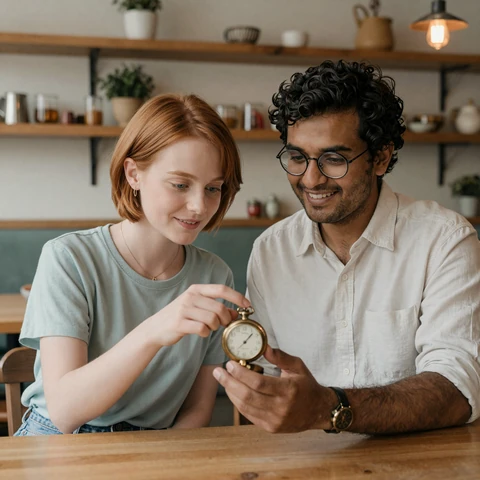
Iris and Naveen, an Autistic couple who met on a spectrum dating site, looking together at a pocket watch in a Portland cafe

Iris & Naveen

Both Autistic · Together 14 months
Our first chat was 600 words on each side about train timetables and the history of standard time. On a regular app that would have been the end. Here it was the start.
Emma and Jules, an engaged AuDHD couple, laughing together over a jigsaw puzzle in a sunny kitchen

Emma & Jules

AuDHD couple · Engaged
I told Jules my reply window in week one - 'within 48 hours, sometimes 5'. She did the same. We never had the silent-treatment anxiety I used to live in.

More autism dating success stories.

Many Autistic adults also identify as ADHD, AuDHD, or simply neurodivergent. These communities overlap heavily and members often browse all three.

ADHD Dating

For adults with ADHD or AuDHD. Time-blindness-aware reminders, rejection-sensitive-dysphoria filters, hyperfocus prompts. Strongest overlap with the autism dating community on this platform.

Meet ADHD singles

Neurodivergent Dating Guide

Relationship advice for autistic adults and the broader neurodivergent community. Covers AuDHD dating, parallel play, info-dumping etiquette, and how to drop the mask without losing the match.

Read the guide

How to Disclose Disability

A three-stage disclosure model with specific scripts for invisible diagnoses including autism. When to mention it in your profile, in early chat, or face-to-face.

Read the disclosure guide

Autism Dating App: Frequently Asked

What is the best dating app for autism?

The best autism dating app is one designed around Autistic communication patterns rather than mainstream swipe-and-quip mechanics. DisabledDating offers detailed long-form profiles, no expiring matches, no read-receipt pressure, sensory-friendly UI, and identity-first language by default. Hiki is another strong option for friendship-leaning connection. Either platform avoids the masking trap that drains Autistic adults on Tinder, Bumble, and Hinge.

Do autistic people use dating apps?

Yes, widely. A 2024 Spectrum Women Survey found 71% of Autistic adults have used a dating app, and 78% prefer text-first communication for the first two weeks of a connection. The challenge isn't usage - it's fit. Mainstream apps optimize for fast, ambiguous interaction, while most Autistic users prefer explicit, detailed, slow-paced communication. Specialized autistic dating sites close that gap.

How to find a girlfriend as an autistic man?

Three steps consistently raise outcomes. First, choose a platform where disclosure happens at the profile level rather than mid-conversation. Second, write a long, specific profile - special interest, ideal Saturday, communication pace - instead of a generic two-line bio. Third, suggest a low-sensory first-date format like a daytime museum visit or a botanical garden walk so both of you can hear each other. Internal data shows fully filled spectrum-dating profiles generate 3.1× more meaningful first conversations.

Is there a difference between autistic dating site and aspergers dating site?

The diagnostic term "Asperger's syndrome" was folded into Autism Spectrum Disorder in the DSM-5 in 2013, so clinically the two are the same. Some adults - particularly those diagnosed before 2013 - still identify with the Asperger's label and you'll see it in profiles. Our autistic dating site welcomes both terms and lets members display whichever fits their identity. The matching, sensory settings, and anti-mask features are identical.

What is spectrum dating?

Spectrum dating is dating that explicitly accommodates how Autistic adults communicate and connect - detailed profiles, slow messaging cadence, low-sensory date formats, explicit social scripts, and a no-masking environment. It rejects the unspoken-rule architecture of mainstream apps in favor of clear, written preferences. Both partners benefit: the Autistic person stops translating, and the non-Autistic partner stops guessing.

Do I have to disclose my autism diagnosis in my profile?

No. Disclosure pace is a profile setting with four options - diagnosis in bio, mention in chat, tell in person, or decide as you go. Identity-first members often display "Autistic" in the headline; late-diagnosed members frequently prefer to share in early chat once trust is established. Both approaches work. Disability Studies Quarterly research found 34% higher relationship satisfaction when disclosure happens on the disabled person's own terms rather than under pressure.

How does the platform handle sensory overload from notifications?

Every notification is configurable independently. Choose silent mode, once-daily digest mode, or fully off. Disable autoplay, animations, and sound. Switch to a muted-cream palette. Hide profile photos until tapped. Settings persist across devices and never reset after an update. The default for new accounts is the lowest-sensory configuration - you opt in to anything louder.

Is the autism dating site free?

Yes, the core tier is free with no credit card at signup. Profile creation, long-form prompts, sensory settings, browsing, messaging, and selfie-video verification are all included. Premium adds advanced filters (special interest match, communication-pace match, AuDHD overlap) and the private photo gallery, but the no-mask spectrum-dating experience is fully available on the free plan.

Join an autism dating site where you can stop masking

Create a detailed, identity-first profile in your own time. No expiring matches, no read-receipt pressure, no flashing UI.

Free to join · No credit card · Identity-first by default · Sensory-friendly