
Direct over implied
Say the actual thing. "I am overwhelmed and need an hour alone" replaces hinting, sulking, or hoping the other person guesses. Neurodivergent partners thrive on plain language.
For Autistic adults, ADHDers, AuDHDers, and the neurodiverse couples building something honest. How to date without the script, the small talk, or the social performance you've been told is required.
By Iris Vance, Contributing Writer · Reviewed by community readers · Updated May 2026
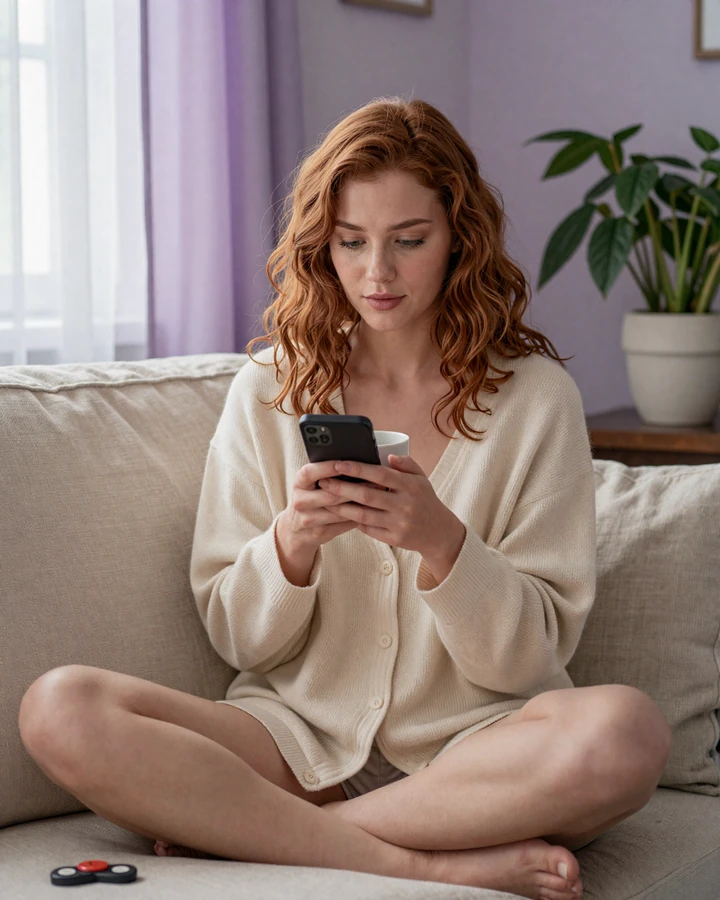
Neurodiversity is the idea that neurological variation - autism, ADHD, dyslexia, Tourette's, and more - is natural human difference, not pathology to be fixed. In dating, that framing changes everything.
The word "neurodiversity" entered print in the late 1990s, most often credited to Australian sociologist Judy Singer, though a 2024 reassessment by Autistic scholars argues the term grew collectively from Autistic self-advocates online. Either way, the meaning held: brains differ, and the difference isn't a defect.
For dating apps, that shift matters. On mainstream platforms, neurodivergent users learn to mask - to fake eye contact, force small talk, hide stims, soften special interests into "hobbies." On a neurodiverse dating site, the same traits stop being liabilities. Long, specific bios are normal. Direct questions are welcomed. Replying twelve hours later isn't ghosting; it's processing.
If you want a deeper look at the specific category pages, see our autism dating site overview and ADHD dating site overview - both written in identity-first or person-first language by reader preference.
AuDHD is the lived experience of being both Autistic and ADHD. It isn't a contradiction - it's a constant negotiation between the part of you that wants a quiet ritual and the part that wants to start something new every six minutes. In dating, that tension shows up in real, specific ways.
An AuDHD profile might love deep monogamy and forget to reply for three days. Might rehearse a date for a week and then improvise the whole thing. Might need the menu in advance and order something off-script. None of this is flakiness. It's two operating systems running at once.
"The first time someone said 'take all the time you need to reply,' I cried in the bathroom. I had never heard that on a dating app before. It turned out the time I needed was about forty minutes - but knowing I had it changed everything." - Sam, 34, AuDHD, user since 2025
A neurodiverse dating site solves the meta-problem first: it stops asking AuDHD users to choose which neurotype to perform. Profiles can list both. Filters surface other AuDHDers. Response-time expectations are explicit. The relationship can start at honesty instead of working backward toward it.
The strongest neurodiverse couples I interviewed for this piece weren't the ones who matched neurotypes - they were the ones who built three habits early.
Say the actual thing. "I am overwhelmed and need an hour alone" replaces hinting, sulking, or hoping the other person guesses. Neurodivergent partners thrive on plain language.
Agree on two phrases for hard moments: one for "I need to pause this conversation," one for "I am not mad, I am processing." Both stop misreads from spiraling.
Cancelling a plan because the social battery is empty is logistics, not rejection. Couples who track energy together stop confusing exhaustion with disinterest.
Voice notes and live video are the default on most mainstream apps. For many neurodivergent daters, that default is the problem. Real-time speech demands tone monitoring, eye contact, processing speed, and rapid-fire wit - all of which cost spoons that text never does.
Text-first messaging gives Autistic adults time to read intention without facial guessing. It gives ADHDers space to draft, reread, and send when their brain is online. It gives AuDHDers the only mode where both halves can show up at the same time.
Here's what changes when text is the primary channel: typo tolerance defaults to high, response windows stretch to days without insult, and special-interest infodumps stop reading as overshare and start reading as the actual point. For the deeper messaging mechanics, see our ADHD relationships guide.
Six practical moves for the first three dates - the period where most neurodivergent matches either deepen or quietly fade.
Send the venue, route, and rough plan in advance. Surprise dates are a neurotypical love language; predictability is yours.
Quiet cafés, museums in morning hours, walks in parks. Loud bars and packed restaurants burn through energy in twenty minutes.
"I'm free until four" gives both of you an exit ramp. It also kills the social anxiety of not knowing when this stops.
Special interests aren't small talk filler - they're a window. Ask about theirs. Share yours. Three good infodumps beat ninety minutes of weather chat.
Don't schedule the date in the middle of an already loud day. Block an hour of silence after. Recovery is part of the date.
A short "I had a good time, my favorite part was X" text the next day lands better than performative same-night enthusiasm.
Masking is the daily work of suppressing natural neurodivergent behavior to look "normal." On dating apps it tends to look like forcing eye contact in selfies, scripting flirty banter from a template, hiding stims, hiding scripts, hiding the actual brain you brought.
Research on Autistic adults consistently links sustained masking to burnout, depression, and identity confusion. In dating, the cost is more specific: every date you mask through is a date where the person who shows up is someone you can't keep being. Relationships built on masked profiles tend to collapse around the eight-month mark, when the energy runs out and the real self surfaces anyway.
"I stopped writing dating bios that sounded like everyone else's. I wrote one that mentioned my special interest, my reply rhythm, and the fact that I don't do phone calls. My match rate dropped. My match quality tripled." - Devon, 29, Autistic, user since 2024
The decision to unmask in a profile is the most underrated filter on a neurodiverse dating site. It pre-rejects anyone who wants the performance and pre-selects the people who recognize themselves in the description.
Yes - Autistic adults use dating apps in large numbers, but mainstream apps are often poorly designed for them. Eye-contact-heavy video features, fast-reply expectations, and tiny bio fields punish exactly the traits Autistic users bring. A neurodiverse dating site reverses those defaults, which is why Autistic adoption rates on dedicated platforms run significantly higher than on Tinder or Bumble.
The best dating app for autism is one with long-form profiles, no read receipts, optional video, sensory-aware UI, and identity-first language by default. Mainstream apps rarely tick three of those boxes; neurodivergent dating apps are built around all five. DisabledDating sits in the second category, with a dedicated autism dating section and AuDHD filters.
AuDHD dating is dating as someone with both autism and ADHD. The two neurotypes pull in opposite directions - autism wants ritual, ADHD wants novelty - and AuDHD daters need partners who understand both at once. Dedicated AuDHD filters surface other co-occurring users so the conversation can start past the explanation phase.
Successful neurodiverse couples share three habits: they say the literal thing instead of hinting, they agree on repair scripts for hard moments, and they track energy budgets rather than reading every cancellation as rejection. Plain language replaces implication, and recovery time gets treated as part of the relationship, not a flaw in it.
There is no universal answer, but on a neurodiverse dating site early disclosure tends to improve match quality. Profile-level disclosure pre-filters for partners who already understand the territory and removes the awkward third-date reveal. For a structured approach, see our three-stage disclosure guide.
No - it is differently romantic. Text gives neurodivergent daters time to be funny, specific, and honest in ways that real-time speech often blocks. Many of the strongest neurodiverse couples on the platform fell in love through six weeks of long messages before meeting in person.
Three companion reads that pair naturally with this guide.
Identity-first profiles, sensory-aware UI, and long-form bios built for Autistic adults - the dedicated category page.
See the autism categoryTime-blind friendly features, hyperfocus-aware matching, and audhd filters for ADHDers and combined-type daters.
See the ADHD categoryTime blindness, rejection sensitive dysphoria, and hyperfocus - how ADHD shows up in long-term relationships and what to do about it.
Read the ADHD relationships guide