
Re-Entry Guide · 7 min read

How to Start Dating Again After Acquired Disability or a Long Break

A warm, step-led guide for anyone returning to dating after injury, illness, divorce, or a long pause. Rebuild confidence at your pace, choose the right platform, and send a first message that actually feels like you.

By Maya Okonkwo, Editor · Reviewed by community readers · Updated May 2026

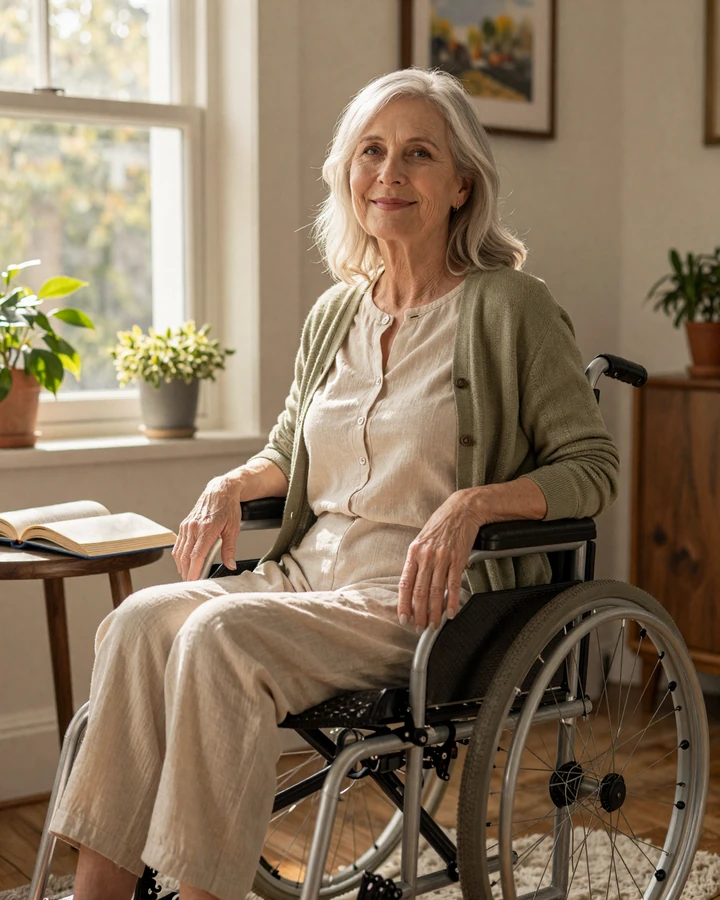
Leslie at home, smiling softly in her wheelchair beside a sunlit window with houseplants and books

What You'll Find Below

  • How to rebuild your identity after an acquired disability - without rewriting the whole self.
  • Five low-stakes confidence rehearsals before your first match.
  • A practical checklist for choosing a disability dating app that fits your life.
  • A profile-writing template for people who haven't dated in years.
  • Opening lines that get replies - and the three that almost never do.
  • Leslie's story: cycling accident at 55, back to dating at 63, partnered with Howard.

Rebuilding Your Identity After Acquired Disability

Dating with a disability you've lived with since childhood is different from dating with one you acquired last Tuesday. After a stroke, a spinal injury, MS diagnosis, or a long covid crash, the harder work isn't usually finding a partner - it's recognizing the person in the mirror as someone who still gets to want one.

Here's the thing: an acquired disability rarely erases who you are. It rearranges the furniture. The humor, the taste in music, the way you listen to your friends - none of that left. What changed is logistics, energy budget, and sometimes how the world reads you on a first glance. None of those changes disqualify you from intimacy.

"I spent the first two years after my accident thinking I had to become a new person before I could date. I didn't. I just had to stop apologizing for being the same one." - Leslie, member since 2023

Three reframes that help

  • From "before and after" to "and now." You're not auditioning to be your pre-disability self. You're meeting people as who you are this week.
  • From hiding access needs to leading with them. Stating what works for you isn't a confession; it's a filter that saves everyone time.
  • From "who would want this?" to "who's worth my energy?" The math is more in your favor than grief tells you. There are millions of disabled and non-disabled adults specifically looking for a real connection - not a fantasy.

Getting Your Confidence Back, One Small Step at a Time

Confidence isn't a switch - it's reps. These three rehearsals lower the stakes before you message anyone.

Take new photos that feel like you

Ask a friend for a 20-minute photo session at home or somewhere you love. Natural light, your real wheelchair or cane or hearing aids visible, the cardigan you actually wear. Three photos beats thirty filtered ones.

Write a 100-word About paragraph

Not for the profile yet - for you. Three things you love, one thing you are learning, one thing you are looking for. Read it out loud. If it sounds like you, save it. If it sounds like a resume, rewrite it.

Rehearse the disability sentence

One calm sentence about access needs that you can say without bracing. "I use a power chair, so accessible venues matter to me." Practice until it lands flat - that flatness is the goal.

Permission to go slow

You don't owe anyone a timeline. Some readers create a profile and don't message a single person for three weeks. That's still dating again. Logging in, looking at faces, and noticing who you'd want to talk to is real progress - not procrastination.

Choosing the Right Disability Dating App for You

What to check before you sign up

  • Manual moderation. A human reviews every new profile, not just an algorithm.
  • Selfie-video verification. Kills photo-scrape catfish accounts in one step.
  • Identity-first or person-first toggle. The platform respects how you name yourself.
  • Accessibility filters. You can sort by access needs without explaining them in every chat.
  • Free baseline that's actually useful. Browse, match, and message at least a little before any paywall.
  • Clear safety reporting. Buttons that work, response times stated, devoteeism named as a violation.
Feature Disability-specific app Mainstream app
Community already gets itYesRarely
Accessibility filtersBuilt inNone
Manual moderationEvery profileAlgorithm only
Disclosure burdenLowHigh - every match
WCAG 2.2 complianceStandardInconsistent

For the full safety side of platform choice, see our dating app safety tips for disabled users.

Writing Your First Profile When It's Been a While

If your last dating profile was on a different platform a decade ago, the rules have changed less than you'd think. Specific beats clever. Real beats polished. Here's a fill-in template that takes about fifteen minutes.

The five-field profile template

  1. One sentence about how you spend a good Tuesday. Concrete - "rereading Octavia Butler with the cat on my lap," not "I love reading."
  2. Two interests with detail. "Adaptive kayaking on Lake Union" beats "outdoorsy." Detail invites real questions.
  3. One sentence on disability and access, in your own voice. Calm, not apologetic. "I'm an ambulatory cane user - flat, slower-paced walks are my sweet spot."
  4. One thing you're looking for. Companionship, long-term, casual coffee - name it.
  5. One small invitation. "Tell me the last thing that made you genuinely laugh." Gives the other person somewhere to start.

Leave the "no drama, no players" disclaimers out. They read as fences, not boundaries. Anyone worth your time figures out the boundaries from how you actually communicate.

Best Opening Lines That Actually Get Replies

The opener doesn't need to be clever - it needs to be answerable. Specific reference to their profile, easy question, no pressure.

Works

Reference + question

"Your photo at the Tate Modern caught me - was that the Yayoi Kusama room? I have been trying to figure out if it is wheelchair-friendly mid-week."

Works

Shared specific interest

"Another Octavia Butler reader - finally. Parable of the Sower or Kindred for desert-island pick?"

Works

Soft callback to access

"You mentioned ASL - I am hearing and learning, slowly. Any shows you recommend with good Deaf representation?"

Works

Small invitation

"Two truths and a lie about your week - go. I will play next."

Three openers that almost never get replies

  • "Hey." Nothing to answer. Most people scroll past.
  • "You're gorgeous." Reads as a compliment, lands as a wall.
  • Anything that leads with the disability as the hook. "How long have you been in a chair?" tells someone you saw the chair, not the person.

Returning to messaging after a long break? Our three-stage disclosure model shows when to bring more detail into the chat.

Leslie's Story: Back to Dating at 55

Eight years after a cycling accident left her permanently disabled, Leslie met Howard on a disability dating app. Their abilities complement each other in ways neither of them expected.

Leslie and Howard sharing coffee at a sunlit cafe table, smiling gently

Leslie & Howard

Acquired disability · Met in their 60s
I thought 55 was late to start over. Howard had Parkinson's, I had a sitting disability that made driving painful. He drove, my steady hand helped us eat. We fit - not despite the disabilities, because of how honestly we named them.

Leslie's path wasn't fast. She made a profile and didn't message anyone for almost a month. Her first three conversations went nowhere. The fourth one was Howard, who opened with a question about the bookshelf visible in her photo. They wrote for two weeks before a video call, two more before coffee. Her advice to readers in the same chapter of life: "Match the pace to your energy budget, not to anyone else's idea of how dating should look."

Returning-to-Dating Questions

How do I start dating again after an acquired disability?

Start with identity, not apps. Spend a week noticing what about you is unchanged - humor, taste, the way you listen - before writing a profile. Then choose a disability-specific platform so disclosure is built in, not a performance. Most readers find that two low-stakes rehearsals (new photos, one practiced disability sentence) lower the activation cost more than any single piece of advice.

How long should I wait after a breakup or diagnosis before dating again?

There is no universal number. A useful test: can you describe what you are looking for without it being a response to your last relationship or diagnosis? If yes, you are ready to make a profile. Reading and matching can come weeks or months before messaging. Logging in is not a commitment.

What is the best opening line on a dating app?

The best opening line references something specific in the other person's profile and ends with an easy, low-pressure question. "Hey" almost never works. "Your Tate Modern photo - was that the Kusama room?" works because it invites a real reply in one sentence.

Should I mention my disability in the first message?

Not as the hook. If your profile already names it, you do not need to repeat it in the opener. If you are using a mainstream platform without disability filters, a short, neutral mention in the first one or two messages is reasonable - saves both of you time and screens out anyone who reacts badly.

How many messages before suggesting a video call?

A common rhythm is five to ten messages over three or four days, then a brief video call before any in-person meeting. The video call is a safety step, not a romance step - two minutes is enough.

Is it weird to start dating in my 50s or 60s?

No. Leslie was 55 when her life changed and 63 when she met Howard. Dating later in life is increasingly common, and disability-aware platforms skew older than mainstream apps. The pool you are stepping into is bigger than grief makes it feel.

Three guides that pair well with this one as you ease back into dating.

Guide

How to Disclose Your Disability

A three-stage disclosure model - profile, early chat, deeper share - with scripts for visible and invisible conditions.

Read the disclosure guide
Safety

Dating App Safety Tips

Spot fake profiles, recognize devoteeism, verify matches, and plan a safer first date - practical and not paranoid.

Read the safety guide
Category

Dating With PTSD

Trauma-informed dating for survivors, veterans, and anyone navigating triggers in early relationships.

Explore PTSD dating

Start Dating Again, Free

Take it at your pace. Build a profile in fifteen minutes, browse without pressure, and message when you are ready.

Free to join · No credit card · Verified profiles · WCAG 2.2 compliant